
DENVER, CO — The City and County of Denver is preparing to temporarily restrict most vehicle traffic inside Cheesman Park as part of a broader initiative aimed at reducing cut-through traffic and improving safety along neighborhood streets. The changes are part of Denver's Safer Streets Neighborhood Zones Pilot, a program led by the Department of Transportation and Infrastructure (DOTI) that will test temporary traffic restrictions across four locations throughout the city.
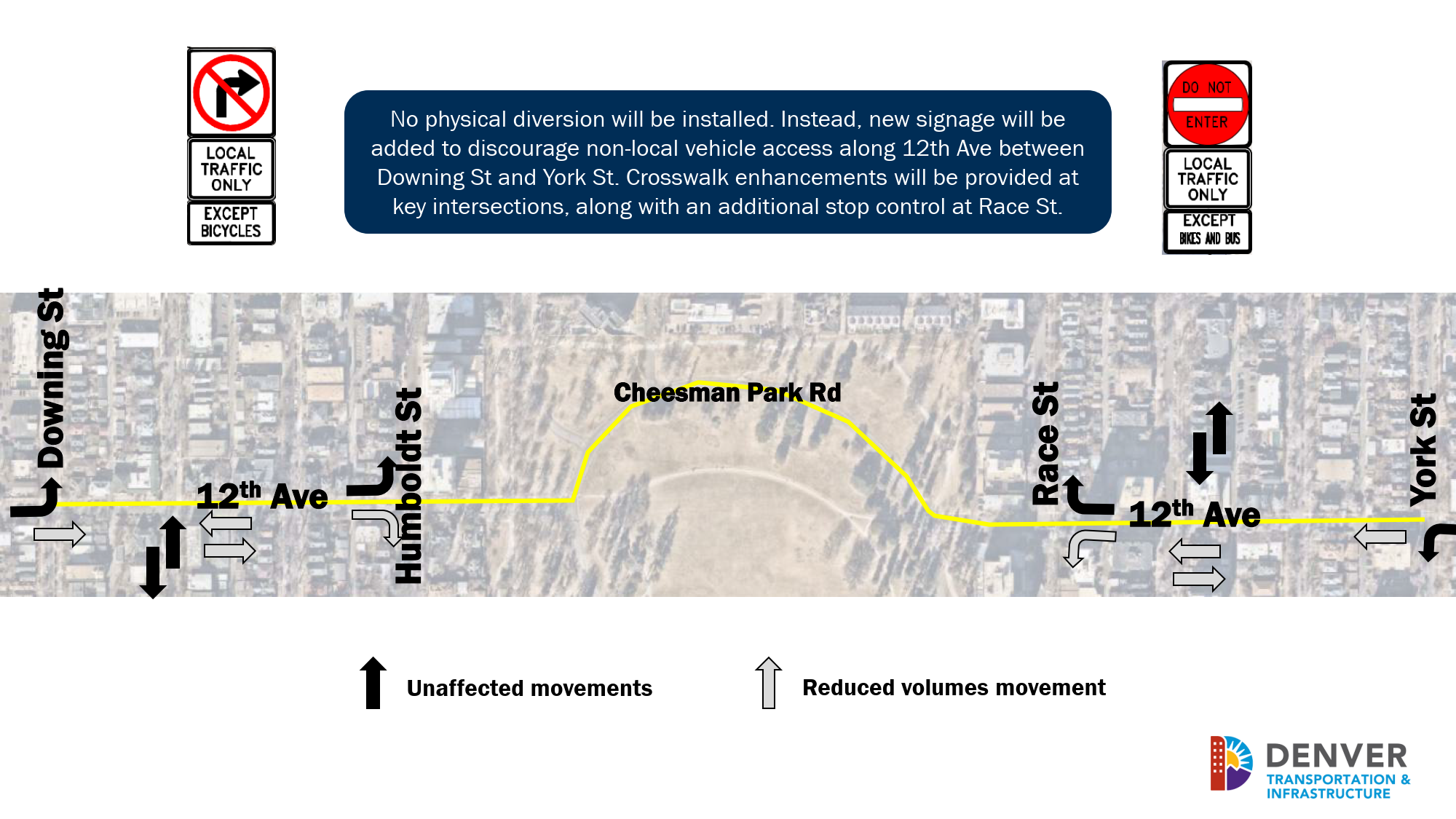
Proposed Traffic Calming and Reductions Along 12th Ave | Sourced from City of Denver
At Cheesman Park, plans from Denver Parks and Recreation show the closure of much of the park's internal road network to regular vehicle traffic, including roadways surrounding the central lawn and Cheesman Pavilion. A portion of the roadway connecting the east and west sides of the park along 12th Avenue would remain open, although through travel by regular vehicles would no longer be permitted. RTD's Route 10 bus would continue operating through the park, while pedestrians and cyclists would retain access.
Outside the park, additional traffic restrictions are planned along East 12th Avenue between Downing and York streets. New signage will restrict eastbound non-local vehicle traffic at Downing Street and westbound non-local vehicle traffic at York Street, discouraging drivers from using the corridor as a shortcut through the neighborhood.
Unlike other locations included in the pilot, no physical traffic diverters will be installed along this section of 12th Avenue. Instead, the city will introduce new signage, pavement markings, crosswalk improvements at key intersections, and an additional stop control at Race Street. Residents, visitors, deliveries, and emergency services will continue to have local access to properties along 12th Avenue outside the park.
The changes also support the city's plans for a future neighborhood bikeway along 12th Avenue, creating a corridor with lower vehicle volumes and fewer potential conflicts between drivers, pedestrians, and cyclists. Beyond Cheesman Park, three additional locations have been identified for temporary traffic restrictions.
Proposed Traffic Calming and Reductions Along 12th Ave | Sourced from City of Denver
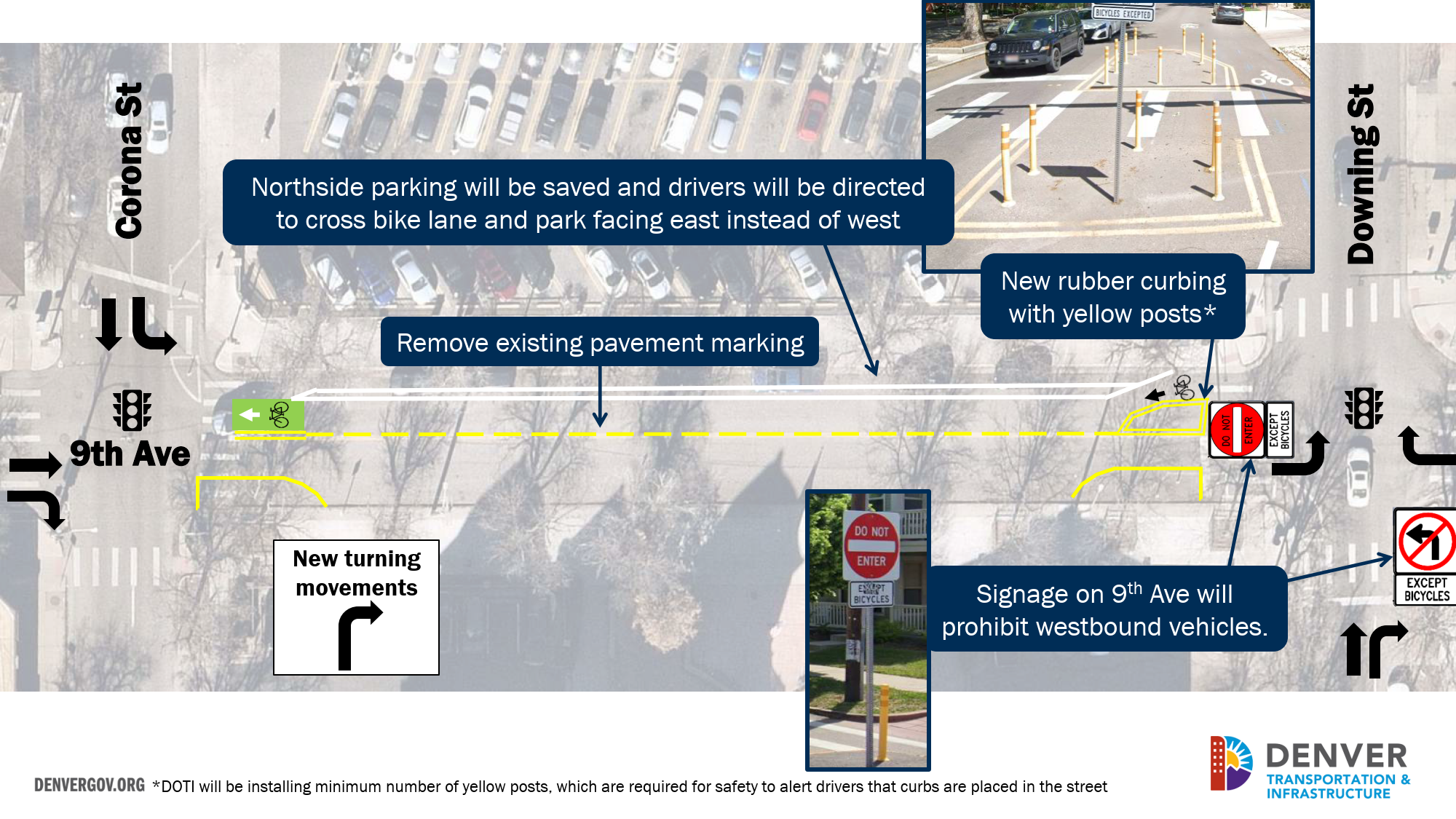
Along East 9th Avenue between Downing and Corona streets, the city plans to restrict westbound vehicle traffic while maintaining eastbound travel. The block will receive a dedicated westbound bike lane, new pavement markings, curb extensions, and updated signage to improve safety near Dora Moore Elementary School. Existing parking along the north side of the street will be retained.
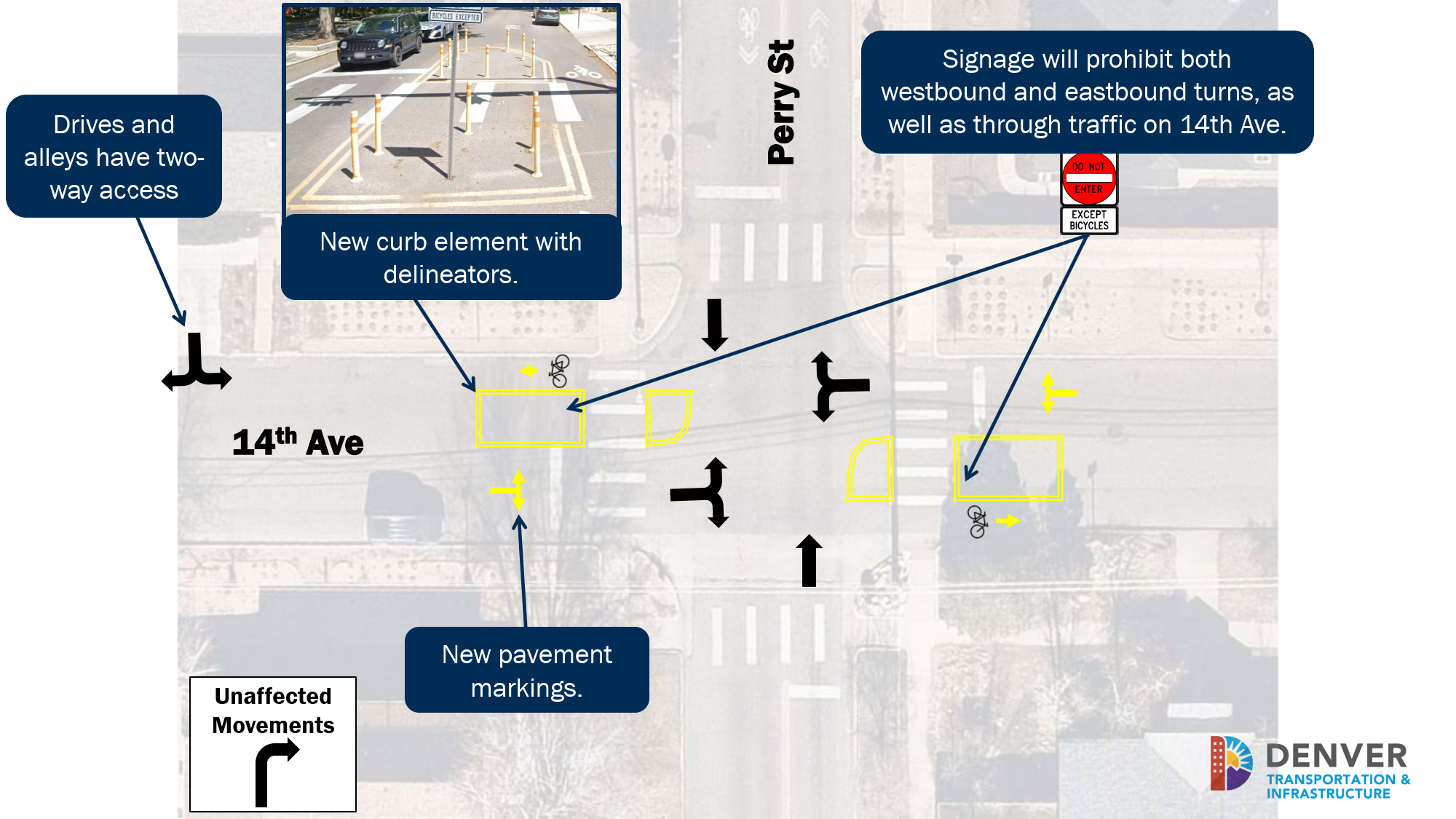
At West 14th Avenue and Perry Street, new traffic restrictions will prevent eastbound and westbound vehicle traffic from entering 14th Avenue at the intersection. Vehicles already traveling along 14th Avenue will still be able to exit onto Perry Street, with the changes intended to redirect cut-through traffic toward West Colfax Avenue.
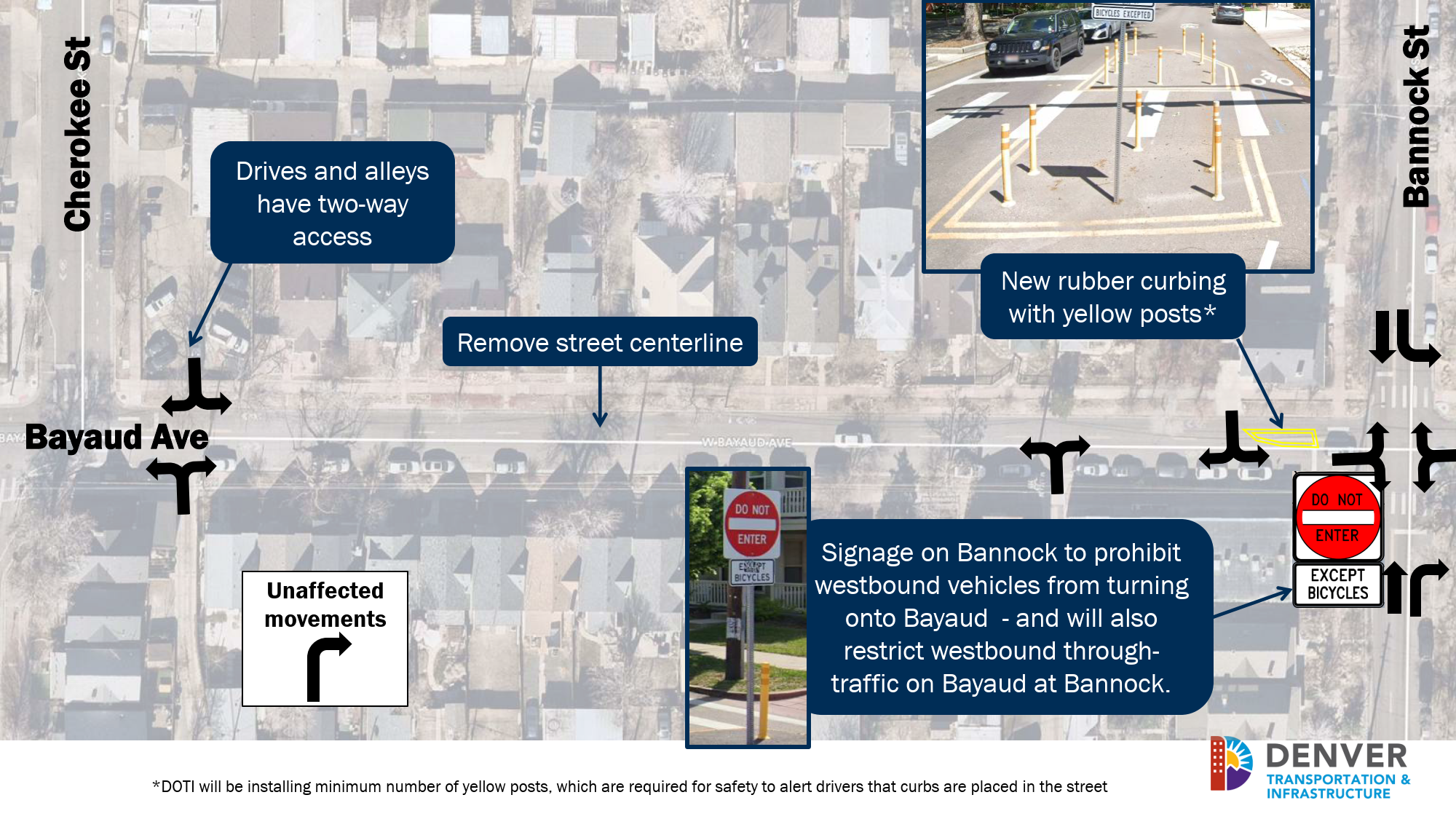
A similar restriction will be introduced at West Bayaud Avenue and Bannock Street, where westbound vehicle traffic entering Bayaud Avenue will be restricted to encourage drivers to use West Alameda Avenue instead of surrounding neighborhood streets.
DOTI initially evaluated more than 250 candidate streets across Denver, considering existing traffic volumes, community feedback, neighborhood conditions, and connections to existing and proposed bicycle infrastructure. An advisory group of local community representatives helped identify the final four pilot locations.
The program introduces a different approach to transportation infrastructure improvements in Denver. While the city's traditional roadway improvement process typically takes approximately three years from design to construction, the pilot aims to complete that process in less than 12 months using temporary, low-cost materials.
Among the program's measurable objectives are increasing pedestrian, bicycle, and other non-motorized travel by at least 50%, achieving at least 90% driver compliance with the new restrictions, and reducing daily vehicle volumes to 1,000 vehicles or fewer.
Community engagement and installation are scheduled for fall and winter 2026, followed by approximately six months of evaluation. During that period, DOTI will monitor vehicle speeds, traffic volumes, crash trends, impacts on surrounding streets, and community feedback.
The restrictions are not currently intended to be permanent. Following the evaluation period, the city will determine whether to maintain, modify, or remove the individual traffic restrictions or pursue longer-term infrastructure improvements. Final recommendations for the pilot locations are anticipated in spring or summer 2027.
Read More About Upcoming Construction Projects
Get a deeper dive on the who, what, when and why behind the city’s next construction projects.
Interested in sponsorship? Learn more about a founding sponsors and how to get involved.
All project information was sourced from publicly available site plans, renderings, and permitting documents.

7 minute read • A new traffic-calming pilot will restrict vehicle travel through Cheesman Park and introduce additional restrictions at three other locations across the city.